TIGER
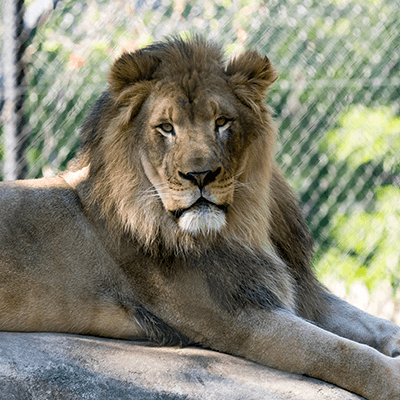
Scientific Name: Panthera tigris
Habitat: Tigers are highly adaptable to different habitats, living anywhere from grasslands to tropical swampland.
Diet: Tigers hunt alone and at night for their prey, which usually consists of large and medium sized mammals.
Life Span: About 30 years.
Reproduction: Mating can occur all year round, but is generally more common between November and April. Usually give birth to a litter of 3-4 cubs.
Fact: The Association of Zoos and Aquariums estimates that up to 12,000 tigers are being kept as private pets in the USA, significantly more than the world's entire wild population. 4,000 are believed to be in captivity in Texas alone.
Image of a Malayan Tapir (Endangered).
|
MALAYAN TAPIR - endangered
Scientific Name: Tapirus indicus
Habitat: Lowlands, rain forests in Thailand, Malaysia and Sumatra; areas with a permanent water supply. The tapir must stay in deep shade or it will develop cataracts. Another problem, its feet are adapted to thick, decaying vegetable matter of the rain
forest floor. If forced to walk on concrete or other hard surfaces, it could become lame, and possibly, permanently crippled.
Diet: Leaves, twigs, shoots, fruit and aquatic plants.
Life Span: About 30 years.
Reproduction: Gestation period, 390-403 days. One young born every second year. The young stay with the mother 6-8 months.
Fact: The fleshy proboscis (long, flexible snout) is commonly used as a finger to grab almost out-of-the reach leaves and grass and pull it into its mouth.
BACTRIAN CAMEL - critically endangered
Scientific Name: Camelus bactrianus
Habitat: The deserts and dry steppes in the Gobi Desert, southwestern Mongolia, and northwestern China.
Diet: Camels will eat almost any vegetation in the desert, including thorny twigs and salty plants that other desert dwellers cannot tolerate. A camel can drink up to 50 gallons of water at one time after going without water for a long time in hot weather.
Life Span: up to 40 years
Reproduction: When the female reaches maturity at 3 -4 years she is able to give birth to usually 1 offspring. Gestation is 370-440 days.
Fact: While there are two milion domesticated camels, the Bactrian camel is critically endangered with as few as 1000 in the wild.
MUNTJAC
Scientific Name: Muntiacus reevesi
Habitat: Deciduous or coniferous forests, preferably with a diverse understorey. Also found in scrub and over-grown gardens in urban areas.
Diet: tree shoots, leaves, nuts, berries, acorns and fungi.
Life Span: 15-20 years
Reproduction: Muntjac deer can mate at any time of the year, there is no particular season as there is for the other British deer species. A single kid is produced 7 months after mating happens.
Fact: Muntjac's have elongated canine teeth which can appear as small tusks protruding downwards from the upper lip.