Did you Know? Fun Facts
In 2008 the food
service sold 1.7
million ounces of soda
which equals about 22
white rhinos.
The first animals at the zoo were deer in 1914.
The longest employment of any person at the
zoo was 41 years.
Henry Vilas Zookeeper
Q & A
Beth has been a zookeeper at Henry Vilas Zoo for five years. She spends most of her time with the primates but also circulates over to the seals and aviary. Beth loves her job and admits she can often be found taking pictures of "the awesome animals that grace me with their presence." In honor of "National Zookeeper Week," Beth hosted two Q & A sessions on the Henry Vilas Zoo Facebook page. A summary of the Q & A sessions is featured below.
Q: What is the BIGGEST animal species you have?
A: Our white rhinos, George and Gracie, would be the largest, followed by our giraffes.
Q: How have you been keeping some of the animals who may not have access to large areas of water, such as a pool, cool during hot summer days?
A: Our zoo is working very hard to keep all of the animals comfortable. We mist many of them and provide ice blocks and frozen treats to those who are interested. Most animals stay cool by doing very little in terms of activity.
Q: I know you are all working hard to make sure the animals are comfortable. Do you keep some of them inside during hot weather?
A: Some animals, such as the wallabies and gibbons, are kept inside during hot weather. Many others are out for just a limited amount of time. For example, on really warm days, the lions and tiger have been coming in around 2 p.m. for their comfort. Most of the other animals prefer to be outside no matter the weather, and others, such as our bison, really have no other place to go.
Q: Is the children's barn in use? What is the plan for that building?
A: Our children's barn is up and in use by a variety of animals, mainly our young goats. We are still finishing the other side, which will house Alpaca.
ABOUT THE ANIMALS
Q: Are seals endangered?
A: The harbor seals we have at Henry Vilas Zoo are not endangered, but there are many species of seals that are endangered.
Q: Are lions endangered?
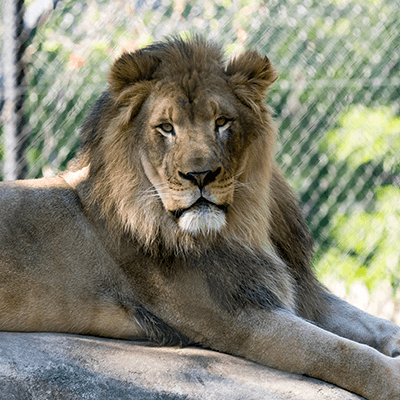
A: Yes, lions like Henry, Vilas, and Leo Pold are endangered.
Q: Are the giraffes able to have any kind of enrichment activities? Do enrichment activities seem to have much of an effect on animals like the tiger and seals who seem to have a repetitive behavior chain?
A: The giraffes are given new enrichment activities on a daily basis. They are very rough with their toys, so it is often difficult to find things that will withstand their rough play. Sometimes enrichment can be hard to see. Perfume, fans, training sessions, and prisms are all enrichment as well. Some animals in captivity are more prone to repetitive behaviors than others. Our seals and tiger are good examples. They are still given enrichment, but their bodies thrive off that almost constant motion. It is exactly what they would do in the wild, but seals would cover miles of ocean, and a tiger would patrol a huge, multiple square mile territory.
Q: What are the red pandas' favorite enrichment items?
A: Sha-Lei came to us with a love of stuffed toys, and she seems to still have favorites from her old zoo. I think Chang Tan prefers almost any scents as he acts as if scent marking is his second job after sleeping. He will find a perfume or non-toxic lotion in his exhibit and set to work covering it up with his own special eau de panda.
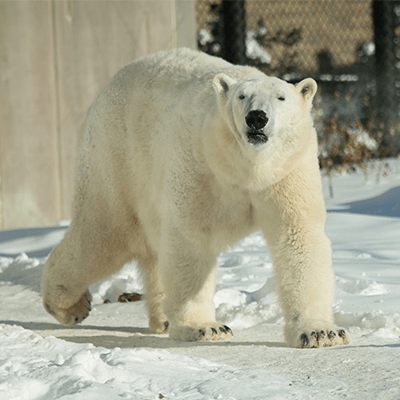
Q: How is Mishka doing now that she is the only polar bear? It seems that she's always in her den no matter the weather.
A: Mishka really blossomed after she became our zoo's only polar bear. She swam, explored, and ate whenever and wherever she wanted. Wild polar bears are solitary animals. Mishka is also a very food-motivated animal and seems to sometimes fixate on her next opportunity to eat. Eating happens in the den. In Mishka's brain, den = food. We are working to get her out and about in hospitable weather.
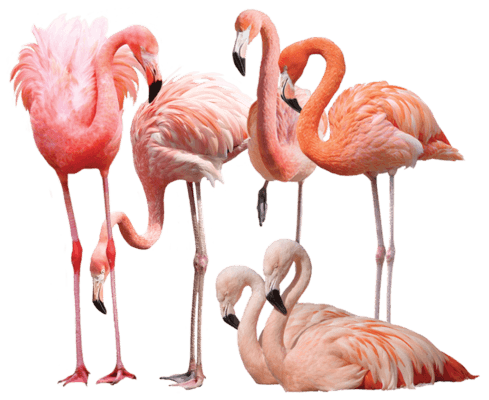
Q: Is there any progress in breeding the flamingos?
A: We have seen some promising signs with our flamingos. They are interested in the nesting mounds. They do courtship displays and pair up with each other, but no babies yet. We may have to make some additional changes to their exhibit. Unfortunately, the zoo has nighttime raccoon visitors which pose a real threat to our colony.
Q: What do the raccoon visitors do to the flamingos?
A: An adult raccoon can easily kill and/or injure many birds in one night. We cannot take the chance of leaving them out and risking their well being. We are working to make the exhibit raccoon-proof. It's not easy.
Q: Would it be possible to post the names of all the animals on your website or the maps?
A: It is often up to individual keepers as to whether they choose to share the names of the animals in their care. For example, if we printed on the maps that our bison's names are Mr. A and Mrs. B, there could be thousands of people shouting their names all day every day, distracting them from when the keepers actually need them to listen to their names.
Q: Is the lion cub going to stay or be transferred somewhere else when he gets older?
A: Leo Pold will be going somewhere else when he gets older. As in nature, a male lion fiercely maintains his territory. Leopold's dad Henry is no different.
Q: Is it hard to work with the primates when they have so many behaviors that are similar to humans? Does it make you sad or emotional that they are in captivity?
A: I work so hard every day to give the apes in particular the very best lives I think are possible in captivity. In my opinion, the animals are rarely sad. The sad part is that two out of three of our chimps were used in entertainment and now believe they are people. They are caught between two worlds and will never fit into either. Please don't keep exotic animals as pets.
Q: Have any animals ever escaped out of their cages?
A: We have had a few MINOR escapes in the last several years (prairie dogs and goats) but nothing too worrisome. The keepers tend to get very obsessive about their lock checking. Unfortunately, some of the scarier moments seem to always involve people bringing their dogs to the zoo. Our male wallaby had a black lab walk up to him. He panicked and started racing into the fencing and glass. Please tell staff or volunteers if you ever see another guest with a dog at the zoo.
Q: Do you celebrate any of the animals' birthdays?
A: We don't usually celebrate birthdays. We have a lot of animals, and that would be a lot of birthday cakes! I would bet a certain lion cub may get a birthday celebration.
GENERAL INFORMATION
Q: What are your favorite animals?
A: Some of my favorite animals around the zoo include the gibbons, chimpanzees, great horned owl (education animal), and the two-toed sloth in the aviary.
Q: What's the aviary?
A: The aviary is also known as the rainforest building. There are lots of birds there as well as the capybaras and river otters.
SO YOU WANT TO BE A ZOOKEEPER
Q: What did you study to become a zookeeper? How open is the "market?"
A: Most zookeepers have a degree in the life sciences such as biology, environmental studies, or zoology. It can be a difficult field to break into, as you need a lot of experience to get a job. However, it's hard to get exotic animal experience without an exotic animal job!
Q: Is a bachelor's degree sufficient, or is a higher degree required to become a zookeeper? How did you go about getting sufficient animal experience?
A: Most zoos in the Association of Zoos and Aquariums require a four-year degree. You can get experience by volunteering at zoos, rescue associations, and wildlife services. Many zoos offer internships, though they may be unpaid.
Q: What is your favorite part about being a zookeeper?
A: My favorite part of the job is giving the animals something to do that they really like, such as a new enrichment device they work on all day or a new structure in their exhibit for them to try out and use.
Q: How many miles a day do you walk while taking care of the animals?
A: It often depends on where I am working, but I have worn a pedometer a few times and gotten between 8 and 11 miles per day. In some areas, it is not as much about the miles walked but number of stairs climbed. Our aviary has some dreaded stairs that can wear you down!
VOLUNTEERING AT THE ZOO
Q: I am interested in helping out at the zoo. Do you have a volunteer program?
A: We do have quite a few ways to volunteer. Please check out the "Support the Zoo - Volunteer at the Zoo" links on our website at www.vilaszoo.org to submit a volunteer interest form, or contact Lynn at lynn@vilaszoo.org to learn more.
Q: How old do kids have to be to volunteer? What volunteer activities are available for them? What training do they have to complete?
A: Kids can volunteer at any age with an adult at our Face of the Zoo information booths. We have a new volunteer this year who is seven months old and comes with his mom every week! Another five-year-old convinced his mom to bring him to volunteer regularly. Youth 13 and older can serve as Teen Ambassadors. Youth 16 and older can do a few more things on their own. All volunteers attend a general information session to learn about volunteer opportunities at the zoo. Once you've selected your volunteer role, specific job training is provided.
PLANNING A VISIT
Q: What time of the day is best to come to see the animals being fed?
A: It depends on the particular animal. Many of the animals are fed off exhibit as a way to reward them for coming off exhibit. For example, all of the great apes have their largest meal of the day in their nighttime bedrooms, but they get snacks throughout the day. Snakes are not fed while we are open to the public.
Q: We are planning a trip to the zoo next month and have to come from an hour away. What's the best non-crowded day to come for a visit?
A: I think the best time of day is 9:30 to 11 a.m. After that, things get a bit hairy, especially during the summer.
FUNDRAISING
Q: Does the zoo ever stay open later at night for events the public can attend?
A: There are opportunities for the public to take part in after-hours events such as the Rock 'n' Roar Zoo Benefit Dance organized by the Friends of the Zoo. If you are a large company or group, you could rent the zoo for an event.
Q: Do you ever offer behind-the-scenes tours?
A: Behind-the-scenes tours are given with large donations. Please check out the "Support the Zoo - Animal Encounters Adventure Opportunities" links on our website at www.vilaszoo.org to learn more.
Q: I've seen the "Future Home of the Arctic Passage" sign for awhile. When will construction begin on the Arctic Passage for Mishka and other arctic animals?
A: I am not sure about the status of that project. The dip in the economy in 2008 and 2009 also affected the zoo. We are working hard to re-evaluate some of the costs involved in the project. We will hopefully have a more definite start date soon. While we zookeepers may not always be on the cutting edge of budget or project talks and meetings, we want new exhibits for the animals as much as our guests do. Thanks for your continued patience with this important project!
WHAT HAPPENED TO?
Q: What happened to your elephants? Why don't you have them? Do you still have the elephant's birthday party? In the 50's and 60's, we would go every summer.
A: Our elephants went to a sanctuary over 12 years ago. A proper elephant exhibit is at least 7 acres. The total acreage of Henry Vilas Zoo is 27. Since we no longer have elephants at the zoo, there's no birthday party.
Q: Will the zoo ever get elephants or zebras back?
A: Since we are accredited by the Association of Zoos and Aquariums and do not have enough extra acreage to dedicate to a proper elephant exhibit, I do not think we will ever have elephants at our zoo again. Zebras may stage a return in the future as we develop the northwest end of our zoo as an African exhibit.
Q: I miss Snorkel. When will a new tapir be arriving?
A: We are currently "in line" for a new tapir. Our zoo has been matched with one, but we have to wait to receive him until he is at least 18 months old. His transfer also depends on proper weather conditions.
Q: The last time I was at the zoo, I noticed you only had one cottontop tamarin. Did the mate pass away?
A: Both of our cottontop tamarins have passed away within the last two years. If you need a little monkey fix, check out the golden lion tamarins and Geoffroy's marmosets in the aviary.
Q: What happened to the black bear?
A: The black bear died and probably won't be replaced.
Q: When I was a child I remember riding a camel on Sunday mornings. Do you still offer camel rides? If not, why?
A: I grew up near Madison and also remember riding the camels in the "ring" near Lake Wingra. The Zor Shriners were in charge of the camel rides. I do not think they would ever return.
RANDOM FACTS
- Nicotine can kill spiders.
- Capybaras are the largest rodent.
- Chimpanzees are thought to have the intelligence of an average human three-year-old.
- Colobus monkeys have very rigid stomachs to break down the cellulose in their leaf-based
diets. They are like the cows of Wisconsin.
- Our Marmosets' names are Yao and Iris.
- We have five female and four male penguins.
- Our rhinos are some of the oldest in U.S. zoos.
- Two of our chimps, grew up as pets.
- We have five meerkats-four females and one male (his name is Groucho).